- GenZtea
- Posts
- DVDs, Hot Water, and Three 22-Year-Old Billionaires
DVDs, Hot Water, and Three 22-Year-Old Billionaires
Welcome back to GenZtea's Newsletter, where I break down trends, industries, and tech with a Gen Z lens.

Natalie Neptune
March 19, 2026
Welcome back to GenZtea's Newsletter, where I break down trends, industries, and tech with a Gen Z lens. I'm Natalie Neptune and I'm so happy you're here.
GenZtea Events


I was just featured in a street interview that you can feel free to listen to:

Here's what we're getting into:
Gen Z Is Buying DVDs Again.
TikTok's New Favorite Drink Is Just Hot Water.
The Creator Economy Companies GenZtea Is Betting On. Business Insider dropped their VC-backed list of 17 creator economy startups to watch. I went through all of them, pulled out the ones that actually matter for our generation, and added the two massive shifts nobody is talking about enough
The World's Youngest Billionaires in 2026. And the geographic breakdown of inherited versus built wealth is one of the most interesting data points I have seen in a while.
TLDR: I'm a Gen Z community builder that created 300+ group chats, host irl events reaching 119+ universities, hosting events for founders and creators in US, and watching the startup world up close every single day. This newsletter is my attempt to make sense of what I'm seeing, with you.
next edition will be the breakdown of the gen z irl market map
Now let's get into it. ⬇️
Things to keep on radar:
Deep Tech Week NYC 2026 | Deep Tech Week is happening March 30 - April 3, 2026 (let me know if you want GenZtea to cohost or be a community partner)
NYC Tech Week is in June and I have locked in my events, open to companies that want to sponsor (one is with a friend from LinkedIn about personal finance , gtm hackathon, genz founder & creator mixer, a career fair, and more)
Promote: just found this new company, let me know your thoughts
The World's Youngest Billionaires in 2026. Here's What the List Actually Tells Us.
Forbes just dropped their "World's Youngest Billionaires 2026" list and I went through the whole thing so you don't have to. Here's what actually matters.
The numbers first:
35 billionaires under the age of 30 in 2026
Combined wealth of $92.4 billion
That's roughly 1% of the world's 3,428 total billionaires
The youngest on the entire list is 20 years old
But the raw numbers are less interesting than the patterns behind them. Because this list tells two very different stories depending on where in the world you're looking.
The AI Founder Moment Is Producing the Youngest Self-Made Billionaires in History
The three youngest self-made billionaires on the entire list are 22-year-old founders Surya Midha, Brendan Foody, and Adarsh Hiremath. They built Mercor, an AI recruiting startup, and each has an estimated net worth of $2.2 billion after the company reached a multibillion-dollar valuation. They are the youngest self-made billionaires ever to appear on the Forbes list. Ever.

Let that sink in. Twenty-two years old. Building in AI. Changing the hiring process for an entire industry. This is exactly why GenZtea is focused on creating spaces for Gen Z founders, creators, and investors because this is the generation that is actively reshaping what's possible.
The list also includes Luana Lopes Lara, a 29-year-old who co-founded prediction market platform Kalshi, making her the youngest self-made woman billionaire in the world right now.

The Geography Is Fascinating and Nobody Is Talking About It
Here's the part I found most interesting:
8 of the under-30 billionaires are American and every single one of them is self-made
13 live in Europe and most of them inherited their wealth
6 are based in Asia
All of the American billionaires on this list built something from scratch. None of them inherited it. Meanwhile the majority of European young billionaires are heirs to major family businesses. That contrast says a lot about the different paths to wealth being created across regions right now and which ecosystems are producing builders versus heirs.

The Two Paths to Under-30 Billionaire Status
The 2026 list makes the playbook pretty clear. There are really only two routes:
Build a fast-growing technology startup, especially in AI, and reach a multibillion-dollar valuation before you turn 30
Inherit wealth from a major family enterprise, like 20-year-old Amelie Voigt Trejes, the youngest billionaire on the entire list and an heir to Brazilian industrial giant WEG
The first path is the one that is accelerating fastest right now. AI is compressing the timeline between founding and billionaire status in a way we have genuinely never seen before. Mercor's founders didn't wait decades. They built something the market needed urgently, raised at a massive valuation, and did it before they could rent a car without a surcharge.
What This Means for Us
The under-30 billionaire list used to feel aspirational in an abstract, distant way. In 2026 it feels different. The founders at the top of it are our age. They are building in categories, AI, prediction markets, recruiting infrastructure, that are directly relevant to the world Gen Z is navigating right now.
The gap between a Gen Z founder with a great idea and a multibillion-dollar outcome has never been smaller. The tools are accessible. The investors are paying attention. The problems worth solving are everywhere.
This list is not just a wealth ranking. It is a map of where the momentum is. And right now, the momentum is firmly with young founders building in AI.
The Creator Economy Companies GenZtea Is Betting On
The creator economy isn't a trend anymore. It's infrastructure.
I've been hosting events with Gen Z founders and creators for years, running 300+ group chats across 119+ universities, and watching this space evolve up close. Business Insider just dropped their list of 17 creator economy startups to watch according to VC investors. I went through all of them and pulled out the ones that actually matter for our generation.
The Companies Worth Knowing About
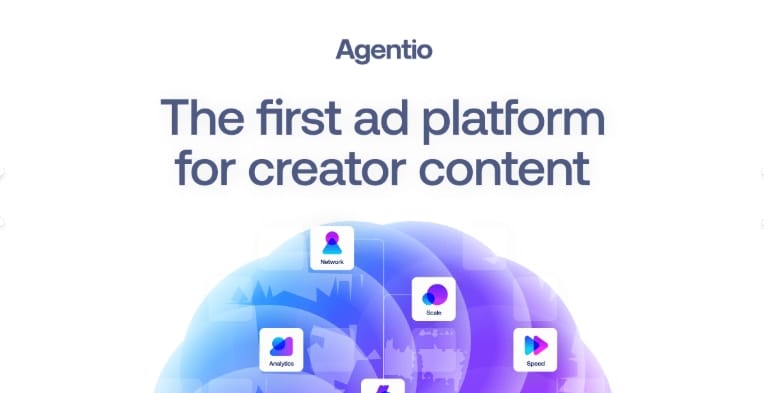
Agentio just closed a $40 million Series B automating creator ad campaigns with AI. If you're a creator trying to understand where brand deal infrastructure is heading, this is the one to watch.
ShopMy facilitates over $1 billion in annual sales, raised at a $1.5 billion valuation, and has over 1,200 brands on the platform. The whole value proposition is that consumers trust creator recommendations more than ads. That's the entire Gen Z ethos in one company.

Whop raised $277 million and is building the infrastructure for creators to run actual businesses. Courses, memberships, digital goods, payments, all in one place. If you've been sleeping on Whop, wake up.
Posh is the one I keep coming back to personally. An IRL events platform founded by NYU dropouts, described by investors as a Shopify for events, raised $40 million, and built specifically for creators monetizing through live experiences. This is literally the category GenZtea lives in.

Delphi lets creators build AI chatbots trained on their own content so fans can pay to interact with a version of them. Life coaches are already using it to scale without burning out. The implications for community builders are enormous.
Whatnot hit an $11.5 billion valuation and raised $968 million total. Live shopping in the U.S. is not a fad. Whatnot is the proof.
OWM lets early-stage companies offer equity to influencers instead of flat fees. 10,000+ creators in the marketplace. For Gen Z creators who actually believe in the brands they work with, this is a completely different kind of brand deal.

The Two Shifts Nobody Is Talking About
Two massive changes are happening underneath all of this that will define the next five years of the creator economy. Almost nobody is discussing them seriously yet.
From Storytelling to World Building
The creator economy used to reward people who told good stories. Now it rewards people who build entire worlds.
Creators have stopped thinking of themselves as talent. They now think of themselves as owners of intellectual property. They create worlds, not posts. They build storylines people return to, characters and concepts they can license, and methodologies that become part of their brand.
Think about what MrBeast has done. It's not a YouTube channel anymore. It's a universe with its own characters, food brand, merchandise, and emotional storylines fans follow across years. The smartest Gen Z creators are starting to think the exact same way. And nobody has built the infrastructure for it yet. Lore management, universe continuity, cross-platform narrative coordination still stitched together from Notion and Discord. That gap is a builder's problem waiting for a builder's solution. That is why I am so bullish on what Zehra is building at Lore.

Stablecoins Are About to Quietly Rewire Creator Payments
This one barely comes up in creator economy conversations and it absolutely should.
Traditional payment systems hit creators with high fees, slow settlement times, and geographic restrictions that make global monetization painful. Stablecoins solve all three at once. They now cut cross-border payment costs by up to 70% and enable 24/7 liquidity management. For a Gen Z creator with an audience across 20 countries, that is the difference between building a global business and being stuck with a local one.
Meta is reportedly preparing to integrate stablecoin payments across Instagram, Facebook, and WhatsApp in the second half of 2026, specifically to reduce friction for international creator payouts. When Meta moves on creator payments infrastructure, it's not a niche play. The application layer for stablecoin-native creator payments is still wide open. That company is going to be very important.
And Nobody Is Gamifying the IRL Creator Experience
Duolingo did it for language learning. Strava did it for fitness. But all digitally. Streaks, leaderboards, community challenges, social accountability loops. The result is some of the highest daily active usage numbers in their categories.
The creator economy is missing this entirely. No streak system for showing up consistently. No meaningful progression system that your audience actually cares about. The platform that figures out how to layer real gamification on top of creator workflows is going to have retention numbers that make every other creator tool look broken by comparison. We grew up gaming. We understand reward loops instinctively. That's the edge. The only one I have seen so far is Try Your Best who has consumer brands as customers.

So Where Are the Opportunities?
The white space I'm watching right now for Gen Z founders, creators, and investors:
The B2B creator payment stack built on stablecoins. The world building infrastructure layer for creators managing universes across platforms. The gamification system that makes showing up as an IRL audience attendee feel like a game worth playing every day. The AI co-pilot built specifically for the emerging creator with 5,000 followers just starting to monetize.
Creators who thrive understand that attention is wide but community is deep. People today pay more for belonging than for content. The companies on this list raised hundreds of millions because investors see what I see every time I host an event or look at what our community of 5,000+ newsletter subscribers is building.
The creator economy used to be about going viral. Now it's about building something that lasts. The window is open but it won't be forever.
Gen Z Is Buying DVDs Again. And It Makes Complete Sense.
We are the generation that was handed six streaming subscriptions, a rotating library of content that disappears without warning, and a monthly bill that somehow keeps going up. So honestly? The DVD comeback makes complete sense.

Gen Z is quietly reviving physical media and the numbers are impossible to ignore:
Physical media sales declined just 9% in 2025, compared to drops of over 20% in both 2023 and 2024
The Criterion Collection is reporting significant year-over-year sales increases, crediting young customers directly
Barnes & Noble's DVD and Blu-ray section grew by mid-double digits in the last year, with their demographics skewing younger
Vidiots in Los Angeles had its biggest month ever in January 2026, renting an average of 170 movies daily and hitting 500 rentals in a single day
U.S. viewers spent 12% more buying 4K UHD titles in 2025 than they did in 2024
This is not nostalgia. This is a reaction.

Subscription Fatigue Is Real and Gen Z Is Done With It
Garcia, a 27-year-old who first got into cinema during the pandemic, put it perfectly. "At this point I'm forced to have six different subscriptions, which is insane, and I still can't find what I want to watch. Why am I paying this much for them to give me a movie for a year and take it away?"
That feeling is everywhere in our generation right now. The promise of streaming was supposed to be access to everything. Instead we got:
Fragmented libraries split across a dozen platforms
Rotating catalogs where titles disappear without warning
Monthly bills that keep climbing with no end in sight
Films pulled from platforms entirely, with no physical alternative
Owning a physical copy is the antidote to all of that. As Lauren, 31, said while shopping at Vidiots: "If something gets deleted off an online platform, I will still be able to watch it because I have a physical copy. It feels really precious to be able to own things physically and not be at the mercy of studios' financial decisions."

That word "precious" is doing a lot of work there. And it connects to something bigger happening across Gen Z consumer behavior right now.
This Is the Same Energy as Vinyl Records
Remember when vinyl made its comeback? People said it was a gimmick. Then it became a $1.5 billion industry. The DVD moment is following the exact same arc.
When Vidiots opened in 2023, it loaned out around 22,000 discs in its first year
A year later that number doubled to 50,000
By 2025 they were hitting over 1,000 rentals a week
January 2026 was their biggest month ever
Robbie McCluskey, the director of Vidiots, called this a "golden age" for physical media. Peter Becker, president of the Criterion Collection, credited the growth directly to young customers rethinking their relationship with physical formats. "In an age where so much is available to us on demand, it becomes increasingly important to us," he said.
People are not just buying DVDs out of nostalgia. They are investing in a higher quality viewing experience they actually own.
Ownership Is the New Rebellion
Garcia called buying physical media an act of rebellion and I think that framing is exactly right.

Gen Z has been conditioned to rent everything:
Rent our music through Spotify
Rent our movies through Netflix
Rent our software through monthly subscriptions
Rent our homes because buying is out of reach for most of us
At some point the generation that inherited subscription culture starts to push back. DVDs are one version of that pushback. So is vinyl. So is the resurgence of local bookstores, farmers markets, and anything that feels tangible and permanently owned.
Barnes & Noble's Bill Castle said something that stuck with me. "People want to own things and build libraries." That instinct toward curation and permanence is deeply Gen Z. We are the generation that builds aesthetic bookshelves for our apartments on TikTok and curates vintage wardrobes because fast fashion feels disposable. Physical media fits that same energy perfectly.
So Where Are the Opportunities?
This trend is not just interesting culturally. It is a real business signal for Gen Z founders, creators, and investors paying attention.
The white space I'm seeing right now:
There is no Letterboxd for DVD and Blu-ray collectors specifically
There is no subscription box built around the physical media revival
There is no platform connecting the Gen Z cinephile community with boutique labels like Criterion, Vinegar Syndrome, and Kino Lorber
The local video store model is ripe for reinvention in new cities, Vidiots is proving that a physical media space anchored to community and live experiences can absolutely thrive
For creators, the DVD collector niche on TikTok is already growing fast with nowhere near enough voices covering it well
The streaming wars gave us access to everything and ownership of nothing. Gen Z noticed. And we are quietly doing something about it.
TikTok's New Favorite Drink Is Just... Hot Water.

We've had prebiotic sodas for gut health. The sleepy girl mocktail for sleep. Lemon water for immunity and weight loss. And now the latest beverage taking over the wellness corner of the internet is hot water. Plain hot water. That's it.
This trend is part of something bigger we've been tracking in the GenZtea community, the wave of Gen Z adopting elements of Eastern medicine and Chinese culture and documenting their experiences on social media. We touched on this in the Japan Effect piece and it keeps showing up everywhere.
The claim: drinking hot or warm water first thing in the morning before breakfast improves digestion, reduces bloating, clears your skin, helps with weight loss, and "detoxifies" the body. All from water.
So we looked into it. Here's what the experts actually say.
The case for it is surprisingly real
For thousands of years, traditional Chinese medicine and Ayurveda have encouraged drinking warm water in the morning to support digestion. The idea is that cold food and drinks slow digestion and cause gastrointestinal discomfort like bloating.
Dr. Lisa Ganjhu, a gastroenterologist at NYU Langone Health, explained that digestion naturally slows while you sleep. Anything you eat or drink upon waking, regardless of temperature, triggers muscle contractions throughout the digestive system. "It's basically telling everyone, OK, get up. We've got to get moving."
Dr. Folasade May at UCLA noted that many of her patients report an easier time with bowel movements after drinking warm water first thing in the morning. Any forward motion in the gut moves not just stool but gas, which can make you feel less distended and less bloated.
When it comes to skin, there is evidence that drinking more water reduces dryness and improves skin appearance. If you are chronically underhydrated, a morning glass of water can meaningfully close that gap.
The parts that are overhyped
The "detox" claim is not real. Water does not remove toxins. Your liver and kidneys do that. Full stop.
The weight loss claims are mostly temporary. Any drop on the scale after a bowel movement is not permanent weight loss. The exception is if hot water is replacing sugary, high-calorie drinks, in which case yes, over time that could make a real difference.
The scientific evidence specifically for hot versus cold water is actually pretty thin. Most experts noted that the temperature may not matter as much as the internet suggests. The benefits likely come from simply being hydrated, not from the water being hot.
The actual takeaway
Dr. May put it best: "Water is really good for you all around."
The hot water trend is less about a magical wellness hack and more about the fact that most of us wake up mildly dehydrated every single day. Drinking anything, water, coffee, juice, first thing in the morning helps with hunger, headaches, grogginess, and digestion. The hot water crowd has just found a ritual that gets them to do it consistently, which is honestly the real win.
Is it a trend worth trying? Probably. Is it going to transform your body like TikTok suggests? Almost certainly not. But if it gets you drinking more water in the morning, the outcome is the same either way.
What Does GenZtea Actually Do?
We get this question a lot! While we're known for our exclusive IRL events and newsletter, GenZtea LLC offers a full range of services to help brands authentically connect with the Gen Z startup community.
GenZtea LLC Services
Gen Z Consulting & Advisory - Strategic consulting and ongoing advisory roles on reaching, engaging, and building authentic relationships with Gen Z consumers, employees, and entrepreneurs. From product development insights to workplace culture recommendations and long-term strategic guidance.
LinkedIn Influencer Marketing - Leverage Natalie’s personal LinkedIn network and authentic Gen Z voice to amplify your brand message to founders, creators, and investors in the startup ecosystem.
Sponsored LinkedIn Content - Strategic paid posts on our personal LinkedIn account to reach our engaged professional network with your brand messaging and thought leadership content.
Speaking Engagements - Book Natalie Neptune for keynote presentations and panel discussions on the future of work, Gen Z in the workplace, startup ecosystems, and community building at your corporate events or conferences.
LinkedIn Workshops - Custom workshops for your team on LinkedIn strategy, personal branding, and professional networking specifically tailored for reaching and engaging Gen Z professionals.
Tech Event Strategy & Execution - Full-service event planning and execution for tech networking events, panel discussions, and community gatherings that authentically connect with the Gen Z demographic.
GenZtea Event Sponsorship Opportunities - Partner with us through financial sponsorship, venue partnerships, or product gifting (CPG & food) for our exclusive networking events.
Ready to work together? Reach out to [email protected] to discuss how GenZtea can help amplify your brand in the Gen Z startup community.