
In partnership with

Welcome back to GenZtea's Newsletter, where I break down trends, industries, and tech with a Gen Z lens. I'm Natalie Neptune and I'm so happy you're here.
Drive Real Shoppers From Screen to Shelf

Securing retail distribution is a huge win — driving velocity is the real challenge. minisocial bridges the gap between digital awareness and in-store sales, trusted by Bero, MadeGood, Halfday Iced Tea, Lundberg, and more.
Hyper-Local Influence: We match you with creators local to your specific retailers (Target, Whole Foods, Sprouts, and more) to produce content for their local audience.
Power Your Paid Media: Whitelist creator content and run it as ads targeting zip codes around your retail locations.
High-Quality Creators Only: Every creator is hand-picked from a pre-vetted database — track records of quality content and real engagement.
Project-based pricing. No long-term commitments.
but first — nyc tech week recap 🗽
if you were in the city june 1–7, you already know. if you weren't …here's what happened on our end:
the Reverse Career Fair at Hunter College co-hosted with Velric, ~260 attendees showed up to flip the script on traditional recruiting
the Gen Z Founder + Creator Mixer at Microsoft 11 Times Square = hit capacity within 30 minutes.
Total reach of 1K+ sign-ups over 60 different universities….. 0 dollars in marketing
and the ripple effect? 17+ companies reached out wanting to host events at Hunter College for future programming. the demand for spaces where gen z founders, creators, and professionals can actually connect IRL is very, very real.
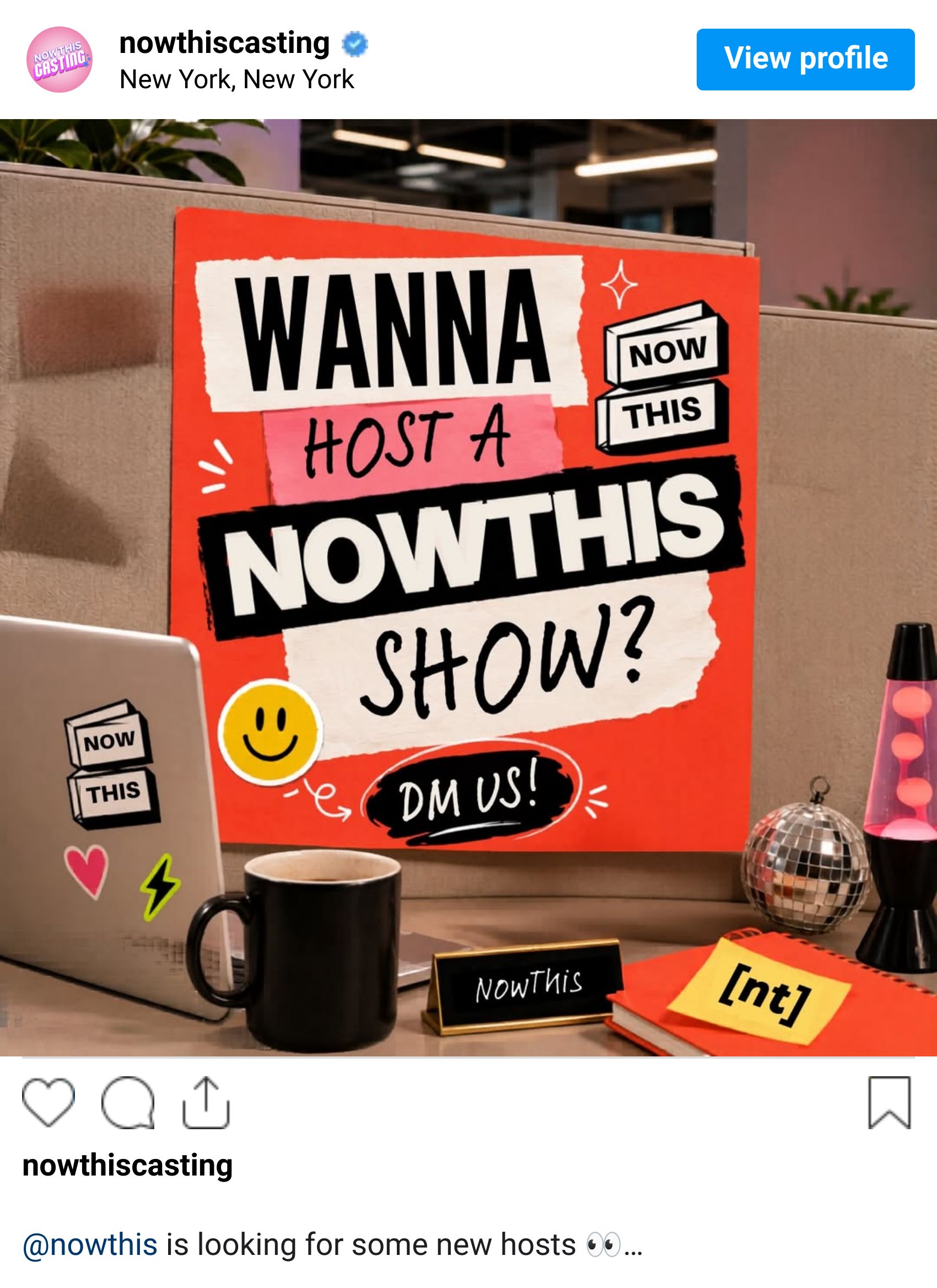
📣 speaking of Hunter College - we're building out our guest speaker lineup for fall semester and i would love to bring more founders, operators, and builders into the room with our students. if you or someone you know would be a great fit, DM me. let's make it happen.
GenZtea Network Events
Opportunities + Jobs
Here's what we're covering:
44% of YC is building the same thing — what the Spring 2026 batch tells us about the agentic economy, where the real infrastructure gaps are, and why the creator economy is being left behind
the $65K "school" that isn't a school — what Alpha School's controversial AI-powered model actually gets right about how gen Z needs to learn
now... let's get into it! ⬇️
44% of yc is building the same thing. here's what they're all missing.
i've been watching two documents side by side for the past week: the breakdown of YC's Spring 2026 batch (196 companies, 395 founders) and YC's own wishlist for what they want to fund next.

and something jumped out that i can't stop thinking about.
here's the snapshot of the batch:
95% of companies touch AI
80% are AI-native, the AI is the product, not a feature bolted on
only 10 out of 196 companies don't use AI at all
70% (137 companies) are building LLM agents, more than every other technical category combined
but here's where it gets interesting (and a little scary): the most common profile in this entire batch is an AI-native B2B AaaS (Agent as a Service) company. 86 out of 196 companies, 44% of the batch, fit that exact description. when nearly half the room is building the same type of thing, you're not competing on your idea anymore. you're competing on how fast you can move and how specific your vertical is.

a quick sidenote on who's actually getting in (see graph)
the founder backgrounds this batch were telling. the most common prior employer? Amazon, with 33 founders, ahead of Meta (17), Google/DeepMind (17), Microsoft (12), and Apple (8). this is an engineer's batch: 70% of founders are technical and 49% have all-technical founding teams.
on the school side, Stanford (24), Berkeley (21), and MIT (15) lead — but there's a surprisingly deep European bench with Oxford (11), TU Munich (8), Imperial, and ETH all showing up. only 5% have a PhDs and just 3% dropped out to start their company. the dropout founder story? still the exception, not the norm.

so what does YC actually want to fund next?
their Summer 2026 wishlist is more specific than anything they've published before. the three biggest signals:

AI-native service companies: not tools that help accountants work faster, but companies that are the accountant
the "company brain": a living system that pulls institutional knowledge from Slack threads, old emails, and people's heads into something AI can actually act on
software built for agents: the next trillion users on the internet won't be people clicking buttons, they'll be AI systems that need machine-readable interfaces and documentation designed for them
that last one is the gap most founders are completely walking past.
but here's what the data is actually telling us, and where i see the real opportunity
70% of this batch is building agents. but nobody's asking the more interesting question: what do 137 agent companies need to actually function at scale?
they need infrastructure. and it's being built, just not fast enough, and not across enough sectors. here's where things stand:
search ✅ Exa just hit a $2.2B valuation in May 2026, built around the thesis that searches from AI agents will be 1000x more than Google searches today. Parallel has built agentic search infrastructure with SDKs and integrations built for agent frameworks, not humans.

payments ✅ Circle launched its Agent Stack, wallets, a marketplace, and nanopayments, so AI agents can hold assets, discover services, and transact programmatically without a human in the loop. Mastercard launched Agent Pay for Machines on June 10th, an open protocol for AI-to-AI payments at machine speed, with 31 launch partners including Coinbase, Stripe, and Cloudflare.

blockchain settlement ✅ a16z crypto put it plainly: AI agents have moved from copilots to economic actors faster than the infrastructure around them, they can execute tasks and transact, but they lack standardized ways to prove who they are, what they're authorized to do, and how they get paid across environments. Circle's Arc Layer 1 is positioning itself as the "Economic OS for the internet," with sub-second transaction finality and fees as low as $0.000001.

creator & community economy ❌ this is the gap
51% of all web traffic is now automated, growing 8x faster than human clicks, and a massive chunk flows through creator platforms, community networks, and social ecosystems running on completely different rails. what's missing:
agent-native infrastructure for sponsorship discovery and matching at scale
an agentic layer for community membership and monetization
machine-readable identity for a creator's audience
Chronicle launched calling itself an "automation layer for the attention economy", their CEO's words: "social is now the top of funnel for nearly every business in the world, and it's still a black box." that's one company. for one slice.

the window to build the infrastructure layer for the creator and community economy is right now, while everyone else is busy building the agents themselves. 👀
the $65K "school" that isn't a school, and what it means for gen z

by now you may have seen the WIRED exposé on Alpha School, the AI-powered private school charging $65,000 a year in New York City that doesn't fit the traditional definition of a school. here's the model:
instruction delivered through an AI-based platform called 2 Hour Learning
guides (not traditional teachers) supervise the room
afternoons freed up for entrepreneurship, leadership, and life skills workshops

controversial? yes. but it's also asking a question that doesn't get asked enough:
what should learning actually look like for a generation entering a world run by AI agents?
gen Z is going to inherit a workforce where 70% of YC companies are building with agents and the agentic economy is projected to hit $1 trillion. the skills that got our parents hired are not the skills that will get us funded, hired, or building. and the traditional classroom model was designed for a world that no longer exists.

Alpha's thesis, that 2 hours of focused, personalized AI instruction can outperform a full school day of one-to-many teaching, is worth taking seriously. the real question isn't whether AI belongs in education. it's how we build the models that actually serve students well.

that conversation is just getting started. and gen Z should be at the center of it.
Other Events + Resources I Found

What Does GenZtea Actually Do?
We get this question a lot! While we're known for our exclusive IRL events and newsletter, GenZtea LLC offers a full range of services to help brands authentically connect with the Gen Z startup community.
GenZtea LLC Services
Gen Z Consulting & Advisory - Strategic consulting and ongoing advisory roles on reaching, engaging, and building authentic relationships with Gen Z consumers, employees, and entrepreneurs. From product development insights to workplace culture recommendations and long-term strategic guidance.
LinkedIn Influencer Marketing - Leverage Natalie’s personal LinkedIn network and authentic Gen Z voice to amplify your brand message to founders, creators, and investors in the startup ecosystem.
Sponsored LinkedIn Content - Strategic paid posts on our personal LinkedIn account to reach our engaged professional network with your brand messaging and thought leadership content.
Speaking Engagements - Book Natalie Neptune for keynote presentations and panel discussions on the future of work, Gen Z in the workplace, startup ecosystems, and community building at your corporate events or conferences.
LinkedIn Workshops - Custom workshops for your team on LinkedIn strategy, personal branding, and professional networking specifically tailored for reaching and engaging Gen Z professionals.
Tech Event Strategy & Execution - Full-service event planning and execution for tech networking events, panel discussions, and community gatherings that authentically connect with the Gen Z demographic.
GenZtea Event Sponsorship Opportunities - Partner with us through financial sponsorship, venue partnerships, or product gifting (CPG & food) for our exclusive networking events.
Ready to work together? Reach out to [email protected] to discuss how GenZtea can help amplify your brand in the Gen Z startup community.
